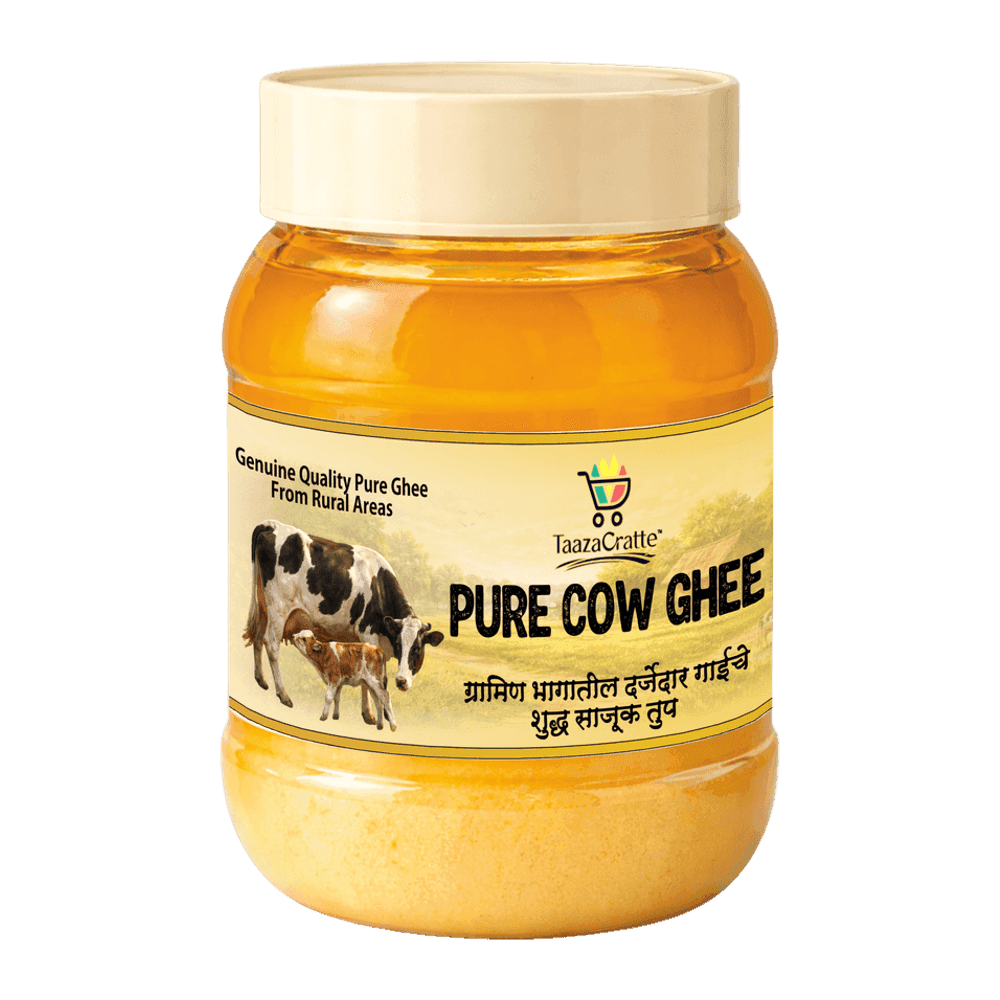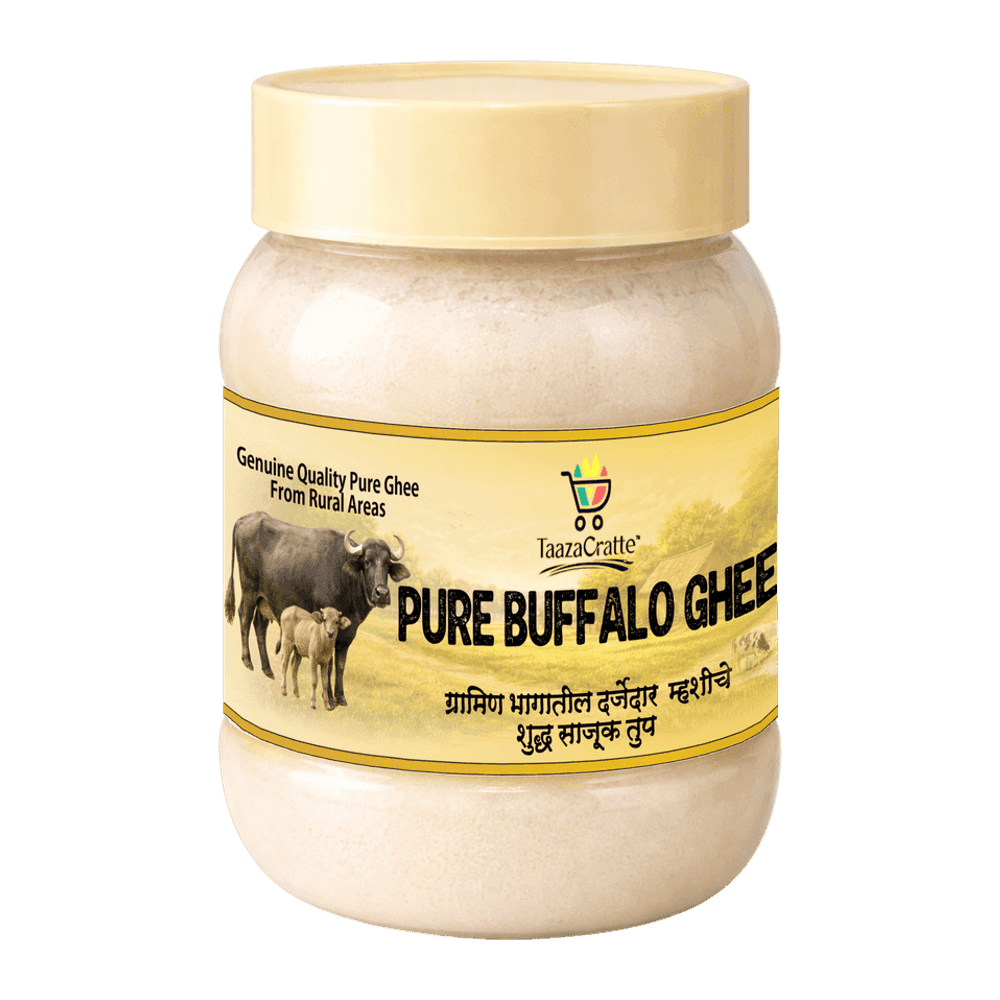
Cow ghee vs buffalo ghee: which one to choose
3 min read
Both are pure, traditionally made ghee — but they aren't the same. Here's how cow and buffalo ghee differ so you can choose the one that suits your cooking and your taste.
Colour and aroma
Cow ghee is typically golden and lighter, with a delicate, nutty aroma. Buffalo ghee tends to be paler, almost whitish, with a denser, richer character.
Texture and taste
Cow ghee is lighter on the palate — many prefer it drizzled over dal, khichdi, rotis or for that finishing spoon on rice. Buffalo ghee is heavier and creamier, which some love for richer preparations and sweets.
It comes down to preference: reach for cow ghee for everyday lightness, buffalo ghee when you want depth.
How to use each
Use cow ghee for tempering (tadka), finishing dals and rice, greasing rotis, and anywhere you want aroma without heaviness. Buffalo ghee shines in indulgent sweets and richer dishes.
Store both in a cool, dry place with a dry spoon — pure ghee keeps well and only gets more fragrant.
Common questions
Which is better, cow or buffalo ghee?
Neither is 'better' — cow ghee is lighter and more aromatic for everyday use, while buffalo ghee is denser and richer for indulgent dishes. It's down to taste.
How should I store ghee?
Keep it in a cool, dry place and always use a dry spoon. Pure ghee keeps well at room temperature.