
Ghee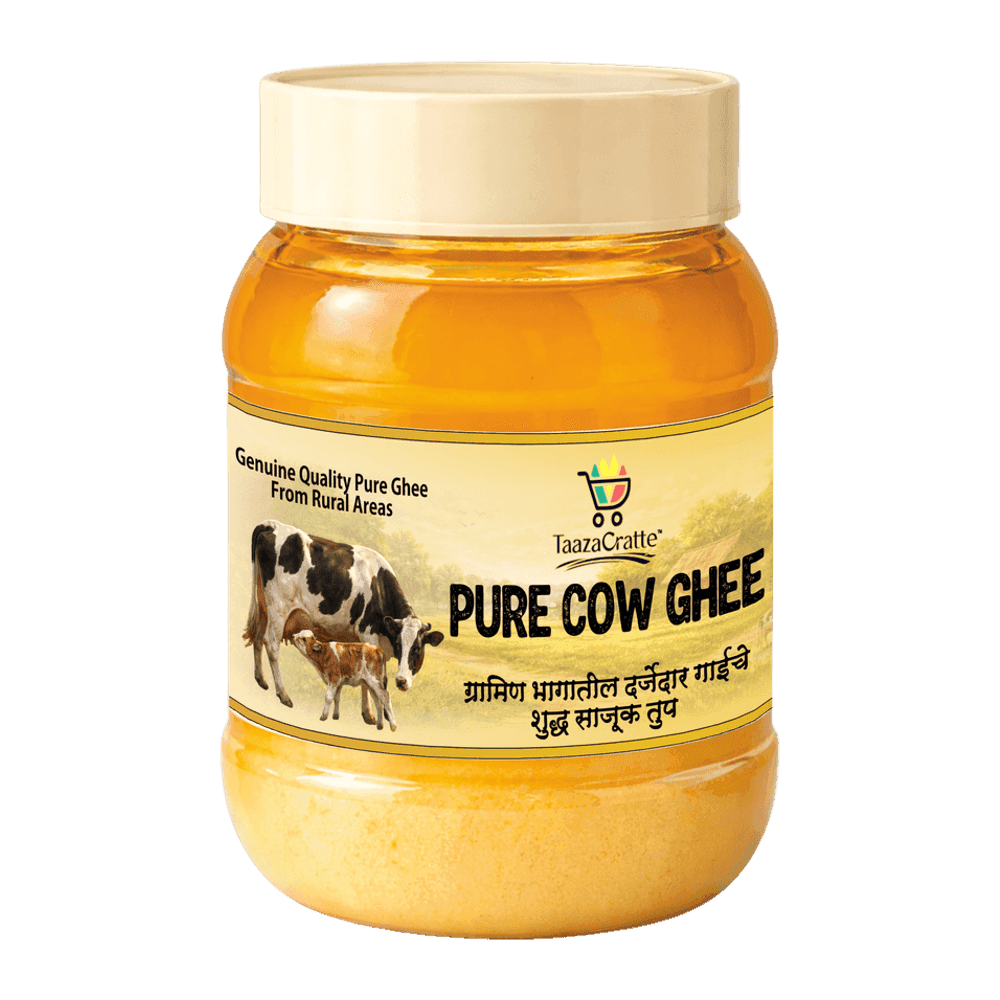
⭐ Bestseller
शुद्ध गायीचे तूप
Cow Ghee
PureGolden
Pure, traditionally prepared cow ghee — rich aroma, golden colour.
साजूक तूप
Ghee is the simplest thing in the kitchen — and the easiest to get wrong. Rushed heat, big-factory blending and long storage all show up in the jar. Here's how traditional ghee is made, how TaazaCratte's is made, and how to judge any jar you ever buy — including ours.
Simmered gently the traditional way — never rushed, never over-heated.
Made in small lots so every jar is fresh, not factory stockpile.
No blending, no additives — just ghee, made the way homes make it.
Well-made ghee sets with a soft, grainy texture — tiny golden granules rather than a flat, waxy block. That grain forms when ghee is cooled slowly and patiently.
Pure ghee smells nutty and warm the moment you open the jar — the aroma of milk solids browned slowly at the end of simmering. A weak or flat smell usually means a rushed batch.
A spoonful should melt quickly and evenly on warm rice or a hot bhakri, turning clear and golden — no cloudiness that refuses to clear.
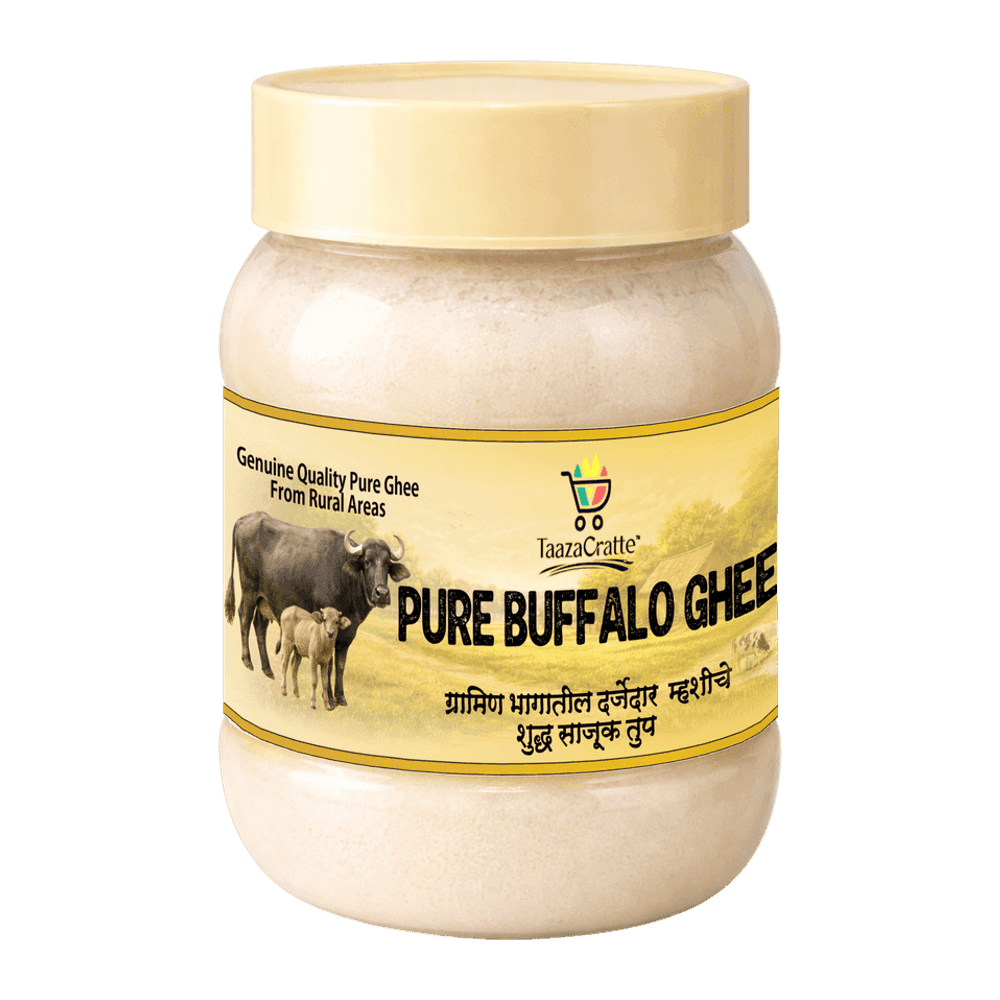
Cow ghee leans golden-yellow; buffalo ghee is paler, almost white. Both are natural — colour differences between our two ghees are the milk, not additives.
Full details are always on each jar's label. Questions about a specific batch? Ask us on WhatsApp.
शुद्ध गायीचे तूप
Pure, traditionally prepared cow ghee — rich aroma, golden colour.
शुद्ध म्हशीचे तूप
Pure, traditionally prepared buffalo ghee — dense texture, deep flavour.