Dry chutneys of Maharashtra: shengdana, javas and karale
4 min read
Wet chutneys live a day; dry chutneys live on the shelf and improve your food all year. Maharashtra's dry-chutney tradition — nutty groundnut, earthy javas, deep karale — exists because these jars travel well, keep long, and turn plain food into a meal with one spoon. Here's your field guide.
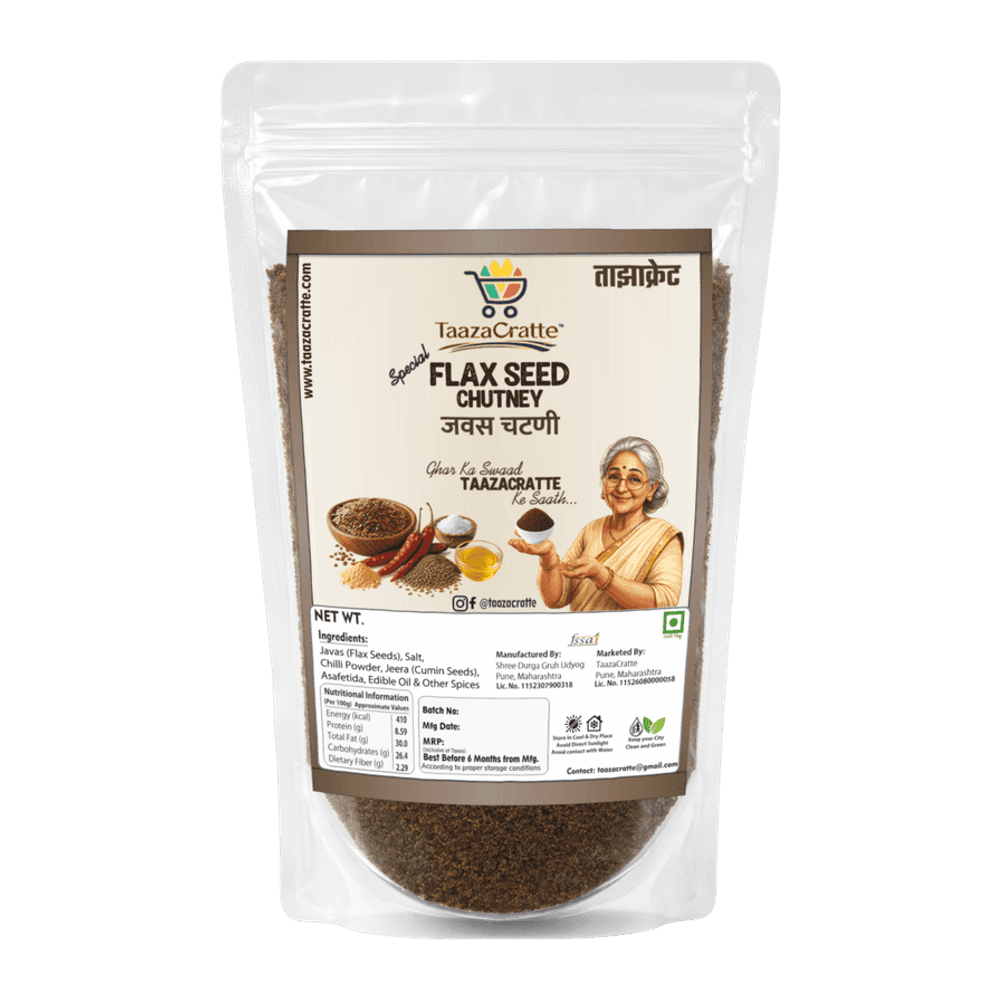
Javas: the quiet earthy one
Javas is flaxseed, and javas chutney is its roasted, spiced form — darker, earthier, less punchy than shengdana. Its natural home is the oldest serving in the book: a spoonful on hot rice with ghee, eaten first before anything else lands on the plate.
It's the jar for people who find peanut chutney too loud — all depth, no shouting.
Karale: winter's companion
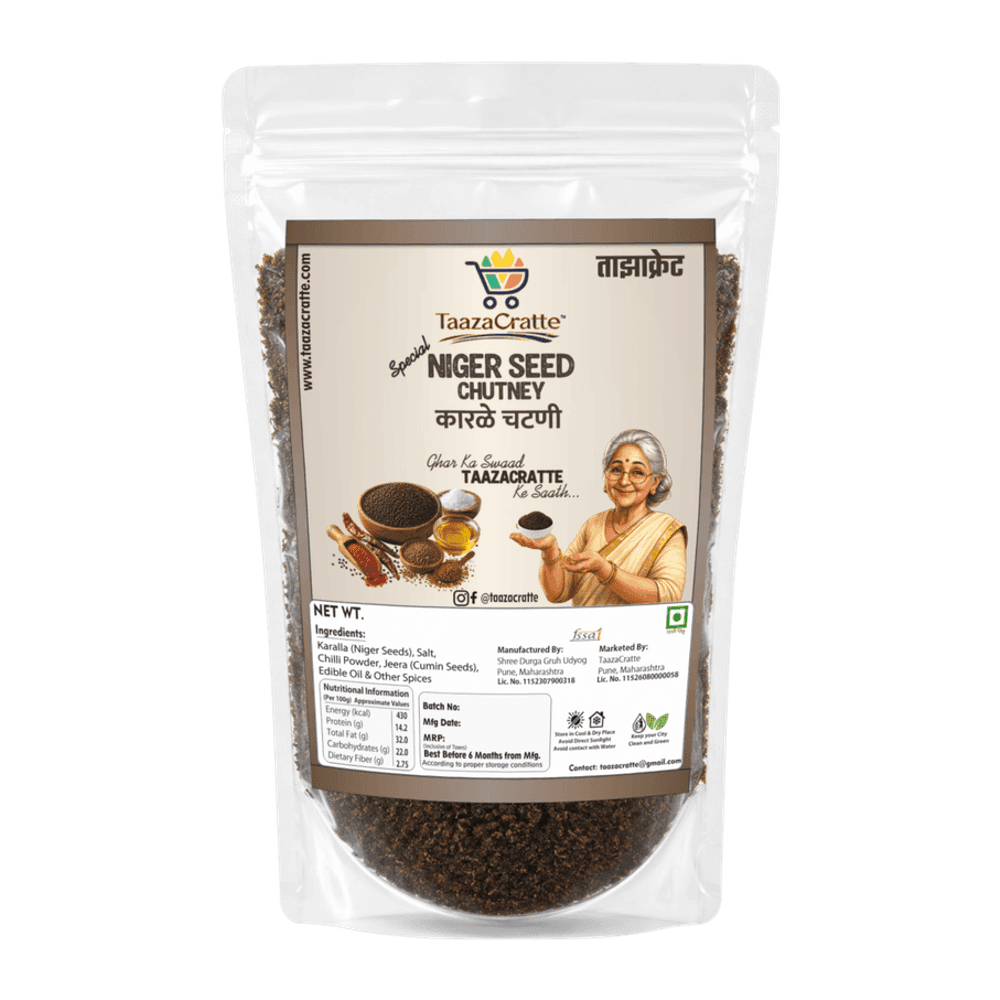
Karale (niger seed) chutney is the least known outside Maharashtra and the most missed by those who grew up with it — deep, almost smoky, traditionally paired with jowar or bajra bhakri through the cooler months.
If you see it, take it: few makers still bother with karale, which is exactly why it lives on our specialities shelf.
One shelf, endless plates
Keep two or three dry chutneys and you have instant answers everywhere: sprinkled over any sabzi that turned out dull, folded into curd for an instant raita-adjacent side, mixed with oil or ghee into a two-minute bhakri spread, or packed for travel where wet food can't go.
They keep for months — dry spoon, tight lid, away from steam — and they're the single easiest way to make everyday food taste looked-after.
Common questions
What's the difference between shengdana, javas and karale chutney?
Shengdana (groundnut) is nutty, garlicky and hot — the bold one. Javas (flaxseed) is earthier and gentler. Karale (niger seed) is the deepest and rarest, a winter classic with bhakri.
How do you eat dry chutney?
Pinched with bhakri or chapati, spooned over hot rice with ghee, sprinkled on dosa/toast/sabzis, or mixed with curd or oil as an instant side. One jar, many jobs.
Are these chutneys fasting-friendly?
These regular dry chutneys contain garlic, so no. For upvas we make a dedicated no-onion, no-garlic groundnut chutney — see the fasting-friendly page.