Garlic in the Maharashtrian kitchen: lasun, from achaar to masala
4 min read
Ask any Maharashtrian cook to name the one flavour their kitchen can't do without and garlic — lasun — will be near the top. It's in the morning tadka, pounded into dry chutneys, and turned into a pickle all its own. Here's how one humble bulb shapes so much of the plate.
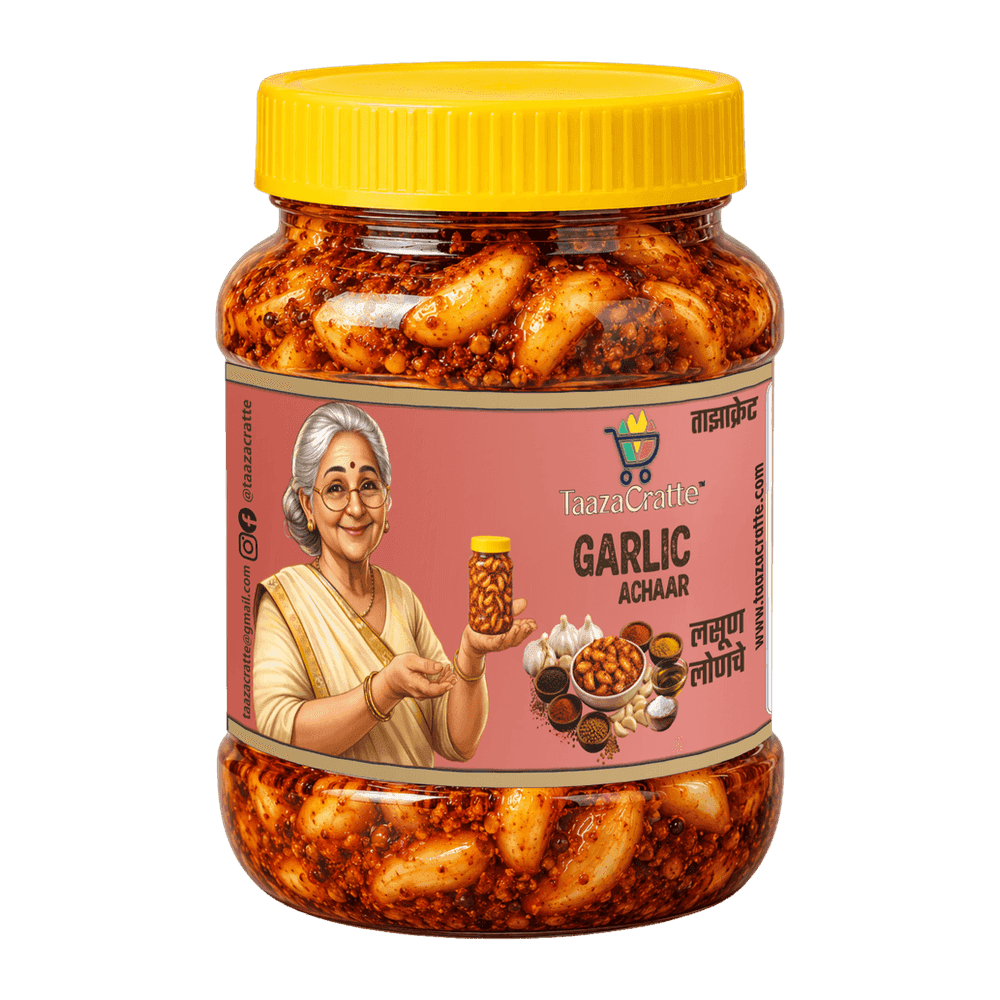
Whole-clove garlic pickle
Garlic achaar keeps the cloves whole, softened slowly in a spiced mustard-and-turmeric oil until they turn mellow and almost sweet. It's the jar that rescues a plain khichdi or dal-rice, and a spoon on the side of a thali does a lot of quiet work.
A little goes far — one or two cloves per serving is plenty, and the flavoured oil is as useful as the garlic itself.
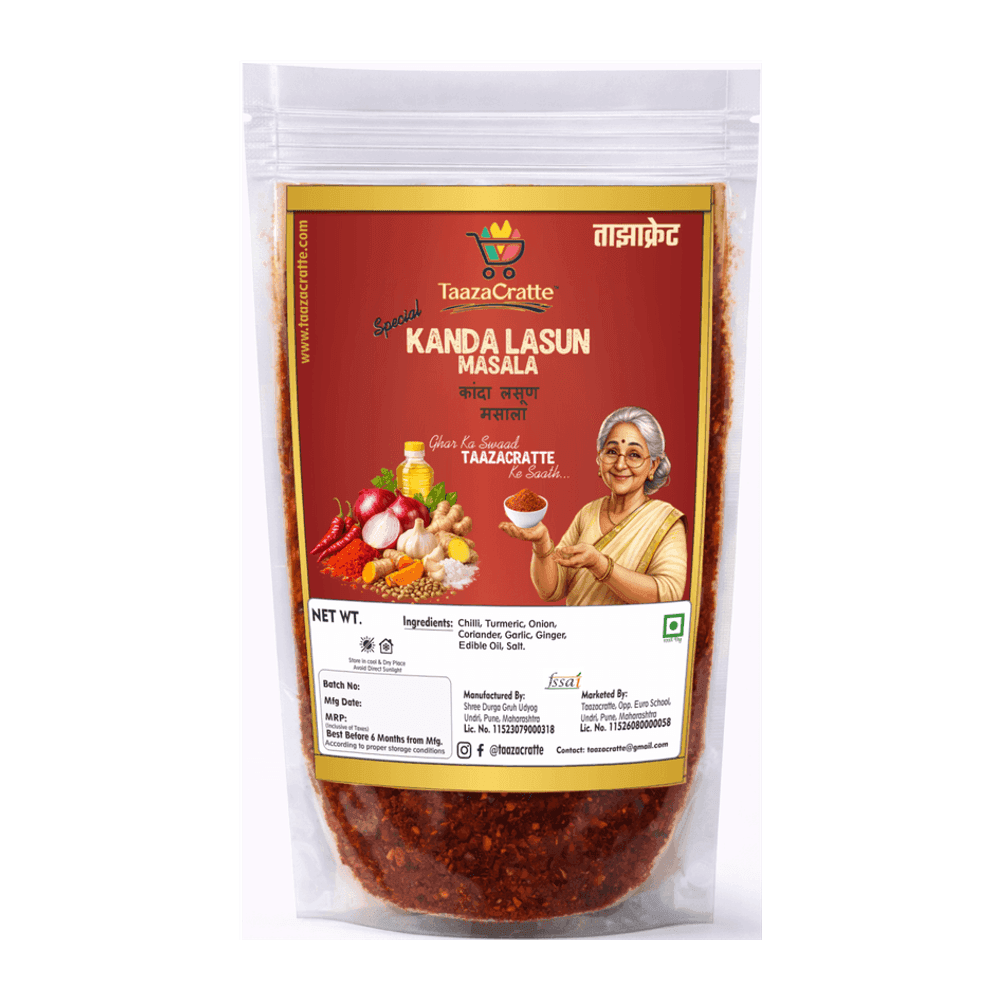
Kanda-lasun masala — the Kolhapuri backbone
Kanda-lasun (onion-garlic) masala is the dry blend behind so much Kolhapuri and Western-Maharashtrian cooking — roasted onion and garlic ground with red chillies and spices into a deep, warm powder. Add it to a rassa, a bhaji, or a misal and the dish gains that unmistakable rustic heat.
The everyday tadka
Even without a special dish, garlic earns its place in the daily tempering — a few crushed cloves crackled in hot oil or ghee before the greens go in. It's the smell that says dinner is being made.
Common questions
Is garlic achaar very spicy?
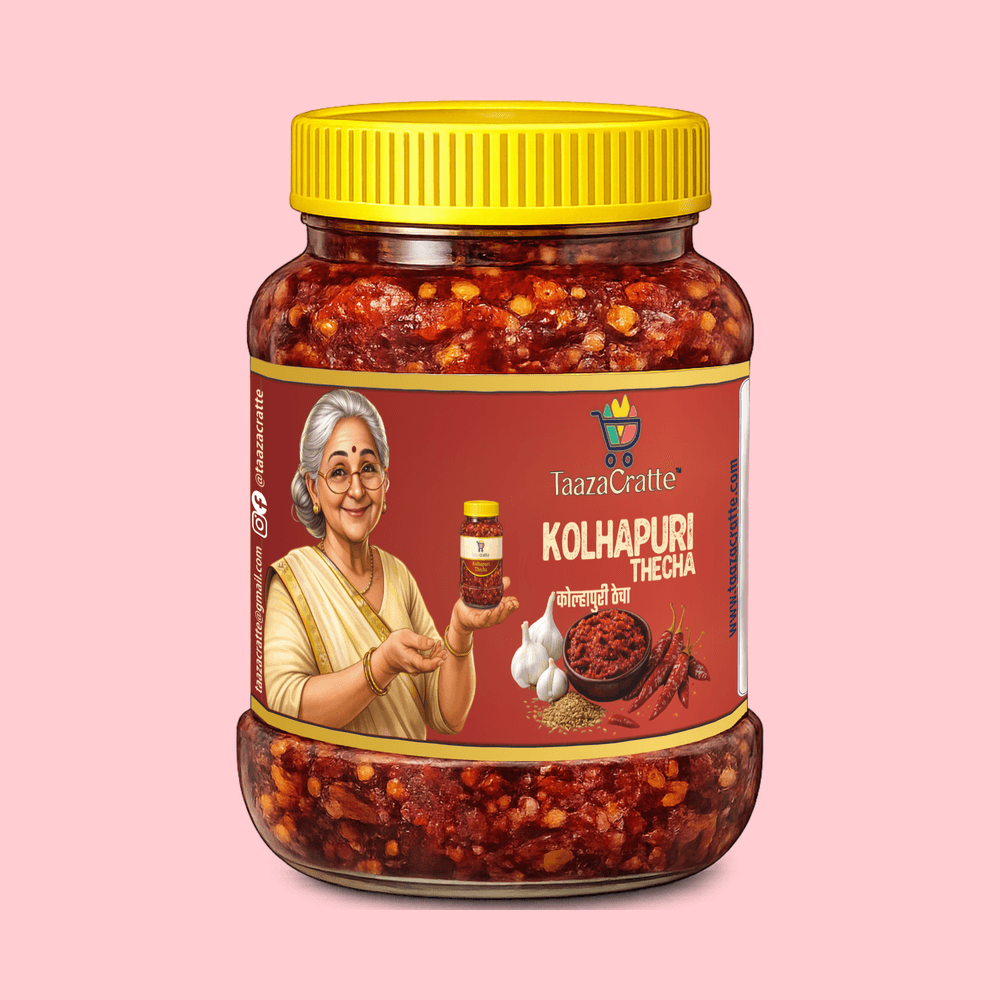
It's more savoury-warm than fiery — the slow-cooked cloves mellow. For real heat, reach for a chilli pickle or thecha instead.
Can I use the oil from the garlic pickle?
Yes — the flavoured oil is lovely drizzled over rice or used to start a simple bhaji. Always use a dry spoon so the jar keeps.
What's the difference between garlic achaar and kanda-lasun masala?
The achaar is a wet, oil-based pickle of whole cloves; the masala is a dry ground powder of roasted onion and garlic with spices — a cooking base, not a side.